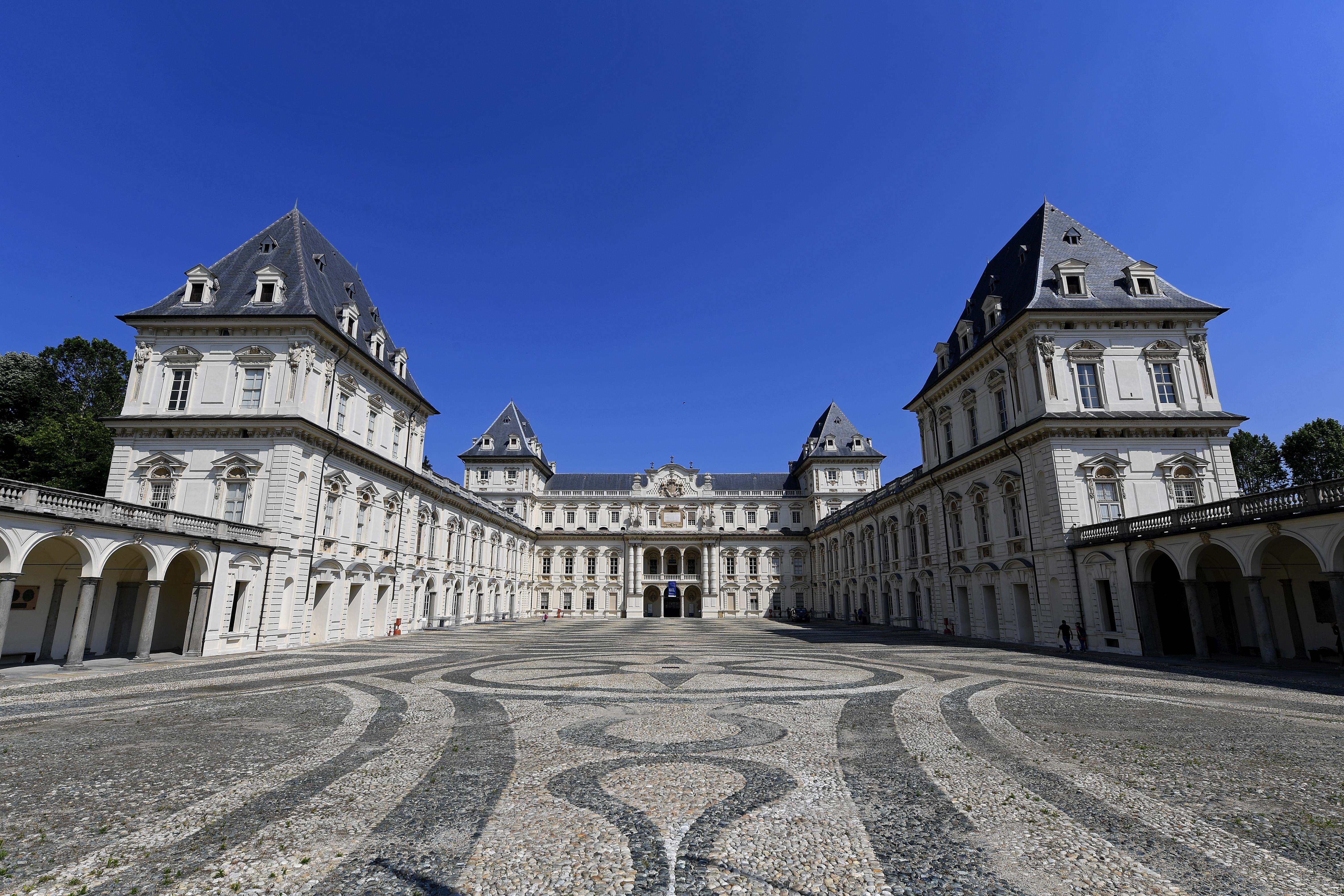
04.09.2026 – Politecnico di Torino (PoliTo) Fourth Ranking List & Scores are announced!
Politecnico di Torino (PoliTo) TIL-A Test (TIL-Architecture) Fourth Ranking
Here are the cut-off scores announced for PoliTo’s TIL-A (TIL-Architecture) Test:
- EU: 36.75 / 50.00 (no change)
- NON-EU: 30.50 / 50.00 (no change)
01.09.2026 – Politecnico di Torino (PoliTo) Third Ranking List & Scores are announced!
Politecnico di Torino (PoliTo) TIL-A Test (TIL-Architecture) Third Ranking
Here are the cut-off scores announced for PoliTo’s TIL-A (TIL-Architecture) Test:
- EU: 36.75 / 50.00 (no change)
- NON-EU: 30.50 / 50.00 (no change)
PoliTo Fourth Ranking will be announced on 04.09.2026.
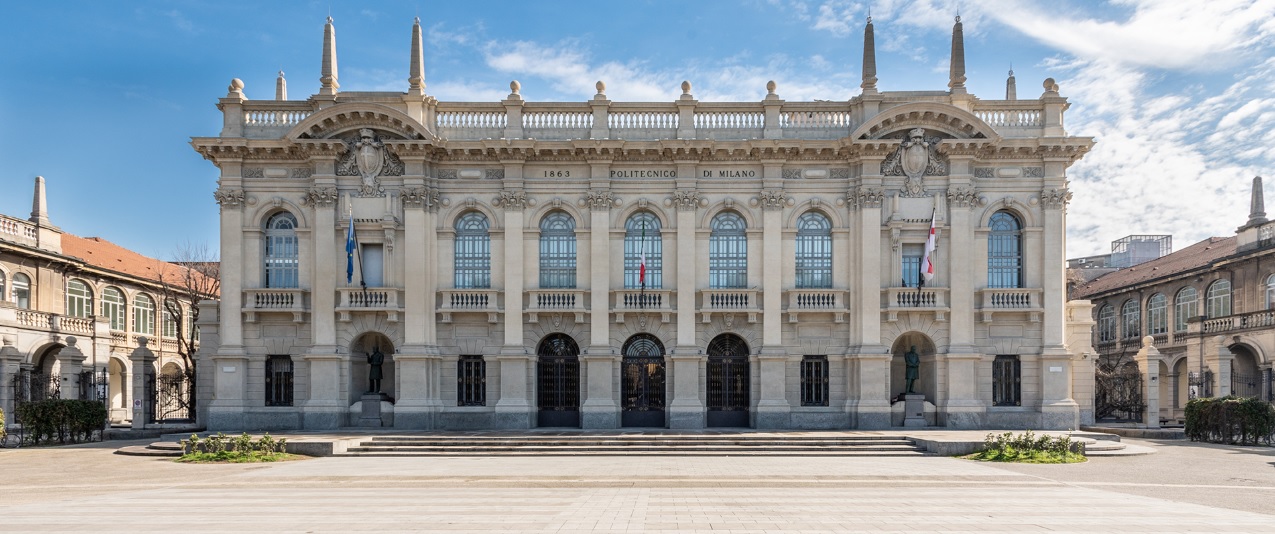
31.08.2026 – Politecnico di Milano (PoliMi) Third Ranking List & Scores are announced!
Politecnico di Milano (PoliMi) Arched Test (Test ARCHED) Third Ranking
Here are the cut-off scores announced for PoliMi’s Arched Test:
Leonardo (Milan) Campus:
- EU: 40.25 / 50.00
- NON-EU: 42.50 / 50.00
Piacenza Campus:
- EU: 40.00 / 50.00
- NON-EU: 42.00 / 50.00
PoliTo Third Ranking will be announced on 01.09.2026
24.08.2026 – Politecnico di Milano (PoliMi) Second Ranking List & Scores are announced!
Politecnico di Milano (PoliMi) Arched Test (Test ARCHED) Second Ranking
Here are the cut-off scores announced for PoliMi’s Arched Test:
Leonardo (Milan) Campus:
- EU: 40.75 / 50.00
- NON-EU: 43.00 / 50.00
Piacenza Campus:
- EU: 40.50 / 50.00
- NON-EU: 42.50 / 50.00
PoliMi Third Ranking will be announced on 31.08.2026
03.08.2026 – Politecnico di Milano (PoliMi) First Ranking List & Scores are announced!
Politecnico di Milano (PoliMi) Arched Test (Test ARCHED) First Ranking
Here are the cut-off scores announced for PoliMi’s Arched Test:
Leonardo (Milan) Campus:
- EU: 41.25 / 50.00
- NON-EU: 44.50 / 50.00
Piacenza Campus:
- EU: 41.00 / 50.00
- NON-EU: 42.50 / 50.00
PoliMi Second Ranking will be announced on 24.08.2026
30.07.2026 – Politecnico di Torino (PoliTo) Second Ranking List & Scores are announced!
Politecnico di Torino (PoliTo) TIL-A Test (TIL-Architecture) Second Ranking
Here are the cut-off scores announced for PoliTo’s TIL-A (TIL-Architecture) Test:
- EU: 36.75 / 50.00 (no change)
- NON-EU: 30.75 / 50.00 (no change)
PoliTo Third Ranking will be announced on 01.09.2026.
24.07.2026 – Politecnico di Torino (PoliTo) First Ranking List & Scores are announced!
Politecnico di Torino (PoliTo) TIL-A Test (TIL-Architecture) First Ranking
Here are the cut-off scores announced for PoliTo’s TIL-A (TIL-Architecture) Test:
- EU: 36.75 / 50.00
- NON-EU: 30.75 / 50.00
PoliTo Second Ranking will be announced on 30.07.2026.
PoliMi First Ranking will be announced on 03.08.2026.
ARCHED test 2026: scores and rankings
Score calculation
The maximum possible score in the architecture test is 50 and it will be calculated by awarding:
- 1 point for every correct response
- 0 points for every response not given
- -0.25 points for every incorrect answer
The ranking will be formulated solely on the basis of:
- the scores obtained in the test,
- the preferences given by all of the candidates, until all available places have been filled.
In the event of equal scores, the ranking will be decided by the score obtained by the candidate in answering the questions relating to the following subjects in descending order: logical reasoning; reading comprehension; design and rendering; physics and mathematics; knowledge acquired through study, history and general knowledge.
Candidates who do not provide any answers will not be included in the rankings.
Results
Three rankings will be published; you could be considered in one of the following outcomes:
ASSIGNED: if you are placed on your preferred programme with places still available > you must enrol
If you do not enrol by the deadlines, you will be considered officially excluded.
RESERVED: if you are placed on a programme that is not your first preference but still has places available > you can enrol or express your interest in being considered in the next ranking.
If you do not enrol or express your interest to be considered in the following ranking by the deadlines, you will be considered officially excluded.
PENDING: if you are not placed on any of the programmes you have indicated a preference for because the available places are already allocated or booked in the published ranking > you cannot enrol, but you can express your interest in being considered in the next ranking
If you do not enrol or express your interest to be considered in the following ranking by the deadlines, you will be considered officially excluded.
PROGRAMME FULL: you cannot enter Politecnico di Milano because the programmes you stated a preference for no longer have places available for the 2026/2027 academic year.
How do I express my interest to be considered in the following ranking:
Go to Online Services > Laurea (equivalent to a Bachelor of Science) and five-year single-cycle programmes: entrance or recovery tests and enrolment, and in “Registration in the Rankings and Change of Preference” click on “I express my interest”.
Three ranking lists will be published for admissions to the Laurea programme in Architectural Design and the single-cycle Laurea Magistrale programme in Building-Engineering Architecture on the basis of whether the ARCHED test is taken in Italian or English:
First ranking
In the first ranking list, published on 3 August 2026, you may be:
- ASSIGNED: you must enrol on the programme for which you have a place assigned by 23:59:59 (CEST) on 5 August 2026.
If you do not enrol within the deadline, you will be considered officially excluded and you will lose the right to enrol. - RESERVED – you can:
– proceed with enrolment in the programme for which you are ‘reserved’ by 23:59:59 (CEST) on 5 August 2026
or
– express your interest by 11:59:59 (CEST) on 6 August 2026 in order to be considered in the next ranking.
If you do not enrol or express your interest in being considered in a subsequent ranking, you will forfeit your place in the rankings and lose the right to enrol. - PENDING – you will not be able to enrol, but you can express your interest by 11:59:59 (CEST) on 6 August 2026 to be considered in the next ranking.
If you do not express your interest, you will forfeit your place in the rankings and lose the right to enrol. - PROGRAMME FULL – all programme places have been allocated and you will not be able to enrol for the 2026/2027 academic year.
Second ranking
In the second ranking list, published on 24 August 2026, you may be:
- ASSIGNED: you must enrol on the programme for which you have a place assigned by 23:59:59 (CEST) on 26 August 2026.
If you do not enrol within the deadline, you will be considered officially excluded and you will lose the right to enrol. - RESERVED – you can:
– proceed with enrolment in the programme for which you are ‘reserved’ by 23:59:59 (CEST) on 26 August 2026
or
– express your interest by 11:59:59 (CEST) on 27 August 2026 in order to be considered in the next ranking.
If you do not enrol or express your interest in being considered in a subsequent ranking, you will forfeit your place in the rankings and lose the right to enrol. - PENDING – you will not be able to enrol, but you can express your interest by 11:59:59 (CEST) on 27 August 2026 to be considered in the next ranking.
If you do not express your interest, you will forfeit your place in the rankings and lose the right to enrol. - PROGRAMME FULL – all programme places have been allocated and you will not be able to enrol for the 2026/2027 academic year.
Third ranking
In the third ranking published on 31 August 2026, you may be:
- ASSIGNED: you must enrol on the course for which you have a place assigned by 23:59:59 (CET) on 2 September 2026.
If you do not enrol within the deadline, you will be deemed to have withdrawn and you will lose the right to enrol. - COURSE FULL – all course places have been allocated and you will not be able to enrol for the academic year 2026/2027.
How to enrol
To proceed with enrolment, you must pay the first instalment. Access the Online Services and click on the link “Laurea (equivalent to a Bachelor of Science) and five-year single-cycle programmes: entrance or recovery tests and enrolment” select “Test Result and Enrolment” and click on “click here to enrol”, answer the questions and select the payment method:
- IMMEDIATE PAYMENT by credit or prepaid card (PagoPA form 1)
Continue until the enrolment receipt is printed. - DEFERRED PAYMENT via home banking or at accredited Payment Service Providers (PagoPA form 3)
We advise you to re-enter and print your enrolment receipt.
There are no benefits nor reductions of the first instalment based on the final secondary school grade.
For further information: Information about fees for Laurea, Laurea Magistrale and Single-cycle programmes
How to request a programme change
If, during this academic year, you have already enrolled on a study programme at Politecnico, in order to enrol on another programme belonging to a different School for which you are eligible, you must request a programme change, i.e. to transfer your enrolment to the new study programme. Your payment of the first instalment will be considered valid.
The first instalment already paid will remain valid.
To request a change of programme:
- log in to your Online Services
- go to the Test Results and Enrolment
- next to the test date, Click here to continue and follow the instructions
ARCHED test 2026: all the information you need
There is a compulsory admission test (called the ‘ARCHED test‘) for the Bachelor of Science programme in Architectural Design and the single-cycle Master of Science programme in Building Engineering-Architecture at Politecnico di Milano.
ARCHED Test Dates 2026
- For programmes taught in English, the ARCHED test in English will take place on 23 July 2026.
- For programmes taught in Italian, the ARCHED test in Italian will take place on 24 July 2026.
You can register for the ARCHED test in Italian and/or English between 14:00:00 (CEST) on 17 June 2026 and 23:59:59 (CEST) on 16 July 2026. The places available on each study programme will be allocated according to the test results and the preferences stated by the applicants (the number of places available is fixed each year).
In order to take the test, you should have:
- already finished secondary school (ie you have sat the final exams)
- you are currently in the final year of secondary school and will have taken the final exams by July/August of the school year prior to that of your enrolment at Politecnico di Milano.
Candidates with disabilities or dyslexia who wish to do so, may request specific support when taking the test. You can report this directly during the test registration process.
Knowledge of Italian for non-EU students interested in courses taught in Italian
If you are a non-EU student residing abroad and with a foreign diploma, interested in programmes taught in Italian, to be admitted to the ARCHED test you must prove your knowledge of the Italian language.
You have two options:
- upload a certificate of Italian language proficiency at a minimum of CLIQ (Certificazione Lingua Italiana di Qualità) level B2 no later than 16 July 2026
or
- take a language test organized through Cisia (Interuniversity Consortium for Integrated Systems for Access) which will take place remotely on 14 July 2026.
Only those who have successfully completed their registration to the ARCHED test by 23:59:59 on 5 July 2026 will be automatically registered to this examination. The test pass mark is a proficiency level of B2 or above.
Further information on accepted certifications is available here
Knowledge of the Italian language is not required for those taking the test in English.
Requirements to participate in the admission test
In order to be eligible to apply for a Bachelor of Science programme or a single-cycle Master of Science programme, you must hold a secondary school qualification obtained after a minimum of 12/13 years of schooling, overall.
Exams taken during university (and non-university) years used to fill any gaps in the admission requirements (i.e. 11 or 12 years of schooling, missing APs, failing to pass the academic competence exam) cannot be used for an evaluation of the previous career for the purposes of shortening the course.
Regarding this, please note that Politecnico di Milano accepts the successful passing of a foundation course of at least one academic year.
The regulations relating to the admission of students to Italian universities, who are in possession of a foreign qualification, are set out in a document (Attachment 1 and Attachment 2) issued each year by the Ministry of University and Research.
Specific requirements are foreseen for students with a degree falling in one of the categories listed below. Such students are supposed to read these requirements in details in the above-mentioned Attachment 1:
- Students with less than 12 years of schooling
- United States high school qualification
- British qualifications
- Missing documentation referring to the passing of academic competence exams
For the following diplomas, see in particular the indications contained in the above-mentioned Attachment 2, page 3:
- International Baccalaureate (IB) qualifications
Such degrees “are valid for enrolment in Italian universities provided that the students in possession of the diploma in question have been admitted to the International Baccalaureate course after having obtained the promotion or the eligibility for the penultimate year of the upper secondary school in accordance with the school system of origin (i.e. the 11th class or 12th class of overall schooling depending on whether, respectively, the school system of origin is organised over 12 years or 13 years of total schooling). In the event that the International Baccalaureate Diploma has been awarded after 11 years of overall schooling, higher education institutions must request an integration for the missing year as indicated in Attachment 1.”
Therefore, students having started secondary school at an Italian institution, will be allowed to enter an undergraduate programme with an International Baccalaureate (IB) diploma obtained after completion of the first three (3) years of school, in addition to the two (2) years of the IB path, for a total amount of 13 school years.
A summary of the specific requirements for the qualifications mentioned in this page is available here.
SPECIFIC REQUIREMENTS FOR CERTAIN TYPES OF FOREIGN QUALIFICATIONS
INTERNATIONAL BACCALAUREATE (IB)
For students who began their secondary education in Italy, the two-year IB program is accepted only if the
student has completed the first three years of upper secondary school and has obtained eligibility for the
fourth year.
BRITISH SECONDARY SCHOOL QUALIFICATIONS
The three A-levels with passing grades required for enrolment may be in any subject, with the exception of
Italian for Italian citizens.
A maximum of one missing A-level can be compensated through a one-year foundation course.
CHINESE SECONDARY SCHOOL QUALIFICATIONS
Regarding the mandatory academic eligibility exam required for enrolment, please note that the Gaokao will
be accepted regardless of the score.
Conversely, the Chunkao exam will not be accepted.
UNITED STATES SECONDARY SCHOOL QUALIFICATIONS
The three APs with a mandatory score between 3 and 5 required for enrolment may be in any subject, with
the exception of Italian for Italian citizens.
ALL OTHER SECONDARY SCHOOL QUALIFICATIONS
If your country of origin has a national state exam for university admissions, you should provide a certificate (and its translation) of participation in that test. The certificate will be accepted regardless of the score.
What the test consists of and how to prepare (2026-27)
The test consists of 5 sections (detailed below), each containing 10 questions. Each section must be solved within 20 minutes. Leftover minutes in one section cannot be transferred to another, and you won’t be allowed to go back to any sections already finished. Calculators are not allowed on the test.
Reading comprehension (10 questions in 20 minutes)
The questions assess candidates’ ability to understand Italian-language texts of various kinds with different communicative purposes, including texts such as scientific essays, narratives by classic or contemporary authors or current affairs pieces published in newspapers or in generalist/specialist magazines.
Knowledge acquired through study and history (including art history) (10 questions in 20 minutes)
The questions (or brief texts of various types and topics) test skills acquired in previous study and general knowledge of cultural topics or current affairs.
In particular, the questions test for:
- the ability to recognise the place and time represented or to locate the time and place of significant historical-cultural events, including specific artistic and architectural events, works of architecture or artistic trends;
- knowledge of the main national and international institutions;
- understanding of phenomena in the fields of law, economics and citizenship.
For non-EU candidates residing abroad:
questions relating to international general cultural knowledge on topics encountered during previous studies or currently topical issues complete this area of assessment
General knowledge and logical reasoning (10 questions in 20 minutes)
The questions test candidates’ ability to solve a problem logically according to presuppositions. These will be shown in symbols or words and will focus on cases or problems, including abstract ones, which require different forms of logical reasoning to solve them.
Drawing and representation (10 questions in 20 minutes)
The test assesses candidates’ ability to analyse graphs, drawings and renderings or terms relating to the object represented, as well as their grasp of the basic notions of representation (plans, elevations, axonometries).
Mathematics and Physics (10 questions in 20 minutes)
The test assesses knowledge of:
- numerical sets and arithmetic (natural, relative, rational and real numbers; sorting and comparing numbers; order of magnitude; operations, exponents, radicals, logarithms), algebraic calculus, Euclidean geometry (polygons, circumference and circle, measurements of lengths, surfaces and volumes, isometry, similarities and equivalences, geometric loci), analytical geometry (fundamentals), probability and statistics (fundamentals), elements of trigonometry (fundamentals)
- basic knowledge of the principles of mechanics: definition of fundamental physical quantities (displacement, velocity, acceleration, mass, momentum, force, weight, work and power); law of inertia, Newton’s law and principle of action and reaction, fundamentals of statics
- basic knowledge of the principles of thermodynamics (general concepts of temperature, heat, specific heat, expansion of bodies)
- basic knowledge of electrostatics and electrodynamics: Coulomb’s law, electric field and potential, capacitors, series and parallel capacitors, direct current, electrical resistance, Ohm’s law, series and parallel resistances
How to register for the ARCHED test
Registration for the ARCHED test will open at 14:00:00 (CEST) on 17 June 2026 and will close at 23:59:59 (CEST) on 16 July 2026.
1. Register for the online services
Before registering for the test, you must register on the Online Services and click on the “Register” link.
Follow the instructions that appear on the screen: it’s a simple and intuitive procedure.
2. Registration for the entrance test
Go on the Online Services. Click on the link “Laurea (equivalent to a Bachelor of Science) and five-year single-cycle programmes: entrance or recovery tests and enrolment” and select “Test Registration” and then choose the test you are interested in.
- Please also enter the following information:
– Information about to your secondary school and your final grade (if obtained); if you cannot find the name of your school in our list, select ‘other School’ and type the full name of the school in the appropriate field;
– details of your ID document , which must be the one that you will show to the Board on the day of the test;
- choose the language of the test (Italian or English)
- State which programmes you are interested in by listing in order of preference up to four (4) choices for programmes in Italian and up to two (2) for programmes in English.
You can modify your preferences until 23:59:59 (CET) on 16 July 2026.
Your preferences for programmes shall be binding for the purposes of forming the first ranking
- You must also pay a registration fee of € 35.00.
Payment methods accepted:
- IMMEDIATE PAYMENT with credit card or prepaid card (pagoPA form 1)
Please note: once you have made your payment, only if you exceed the time allowed to complete the payment and registration process you may need to re-enter the application to complete and confirm your registration for the test. - DEFERRED PAYMENT via home banking or from accredited Payment Service Providers (pagoPA form 3)
Please note: once you have made the payment using the method of your choice, you must re-enter the application to complete and confirm your registration for the test. If you do not enter and complete the registration, payment alone will not allow you to take the test
Please note: payment of the entrance test alone does not mean you are registered for the test.
To make sure that you have correctly registered for the test, at the end of the procedure the time, day and room where you should report to will appear on the screen, and you will be able to print out the test registration receipt. In addition, upon re-entering the application you will see the “Registration Receipt” link.
If you have only paid for the entrance test and have not completed the registration process, you can re-enter the test registration application on Online Services by clicking on ‘Laurea (equivalent to a Bachelor of Science) and five-year single-cycle programmes: entrance or receovery tests and enrolment’ and selecting ‘Test Registration’, then choose the test you want to sit and a date with available places: you will not be asked to make the payment again. Complete the registration until you get to the summary screen showing the time and day of your test.
If you lose your enrolment receipt, you can get another issue by accessing Online Services: click on the link “Laurea (equivalent to a Bachelor of Science) and five-year single-cycle programmes: entrance or recovery tests and enrolment” in the section “Test Registration Receipts”. On this receipt you will find a summary of: your identification code, the date and time of the test to which you have been assigned.
The test fee cannot be refunded.
If you are a student with a disability or dyslexia, you can report this directly during the test registration process.
The day of the test
One week before the test, you will receive an e-mail from CISIA with instructions to follow on the date of the test.
If you wish, even before receiving the information e-mail from CISIA, you can simulate and practise the test by registering at CISIA – reserved area “esercitazione e posizionamento”.
An evaluation of this year’s (July 2025) Arched & TIL-A test scores and predictions for 2026
Written on 11.12.2025
It took me a long time to sit in front of my computer and write my view on what caused this year’s abnormalities, excuse me for the delay.
This year (July 2025), we have witnessed drastic ups and downs with the Arched and TIL-A test scores. Let’s begin by talking about the many firsts of this year, starting with Polito. For the first time in many years, Polito decided to hold its TIL-A tests entirely in-person (albeit still taken on a computer once in campus) for both categories of students (EU and non-EU). Given that last year (2024), the modility has been changed to in person for EU students, this was expected. As a consequence, it was also expected that the non-EU scores would significantly fall – which they did – to a record low score of 28.00, the exact level EU scores had fallen last year.
Now onto the unexpected outcomes: The EU score (for Polito) shot up from 28.00 to 36.00 – an unprecedented rise, although later falling to 33.75 in the final (fourth – Polito can have more than 4 rankings if spots allow it) ranking. This demonstrated that once the “shock” of the announcement of the test being in person passed, students (and parents) adjusted to the new normal, and had made the arrangements to take this year’s test in person. This explains how this year’s TIL-A EU score bounced up from 28.00 to a 33.75.
Now about Polimi and the Arched Test. The initial scores were nothing short of unbelievable, with the Leonardo campus opening scores of 43.50 for non-EU and 40.75 for EU. Piacenza didn’t fare better with 40.50 non-EU and 40.00 EU. (Leonardo later closed with 40.00 for both EU and non-EU, while Piacenza fell to 38.25 and 39.25 for EU and non-EU, respectively.) As an active observer for many years of the test, I have never seen such high scores (you can see the final scores in September 2025 in the articles down below). You might have heard a lot of talk about cheating, but considering the restricted time and the complications of doing such a thing, I discount cheating as a factor. Even if that would be the case for a dishonest few, they’re numbers could never be enough to sway the score like this all across the board. My conclusion is, which was reinforced after consulting this year’s students, is that this year’s test was much easier than those that were before. Basically all of my students, unless impeded by panic or such, have scored much higher than they did on the mock and real tests provided within the courses. I assume the growing popularity of Italy as a country of high quality and affordable education also placed a role. Ever since its inception in 2008, the English-language Bachelor’s in Science in Architectural Design program at Polimi is getting more and more competitive to get into. Therefore, good guidance and tutoring are becoming ever more important factors in helping those that would like to start their architectural careers at Polimi and Polito.
I hope this has been a helpful read, if you have any questions regarding the Arched and TIL-A tests or the courses we provide, please don’t hesitate to contact us.
02.09.2025 – Politecnico di Torino (PoliTo) Fourth Ranking List & Scores are announced!
Politecnico di Torino (PoliTo) TIL-A Test (TIL-Architecture) Fourth Ranking
Here are the cut-off scores announced for TIL-A Test (TIL-Architecture)
- EU: 33.75 / 50.00 (no change)
- NON-EU: 28.00 / 50.00 (no change)
01.09.2025 – Politecnico di Milano (PoliMi) Third Ranking List & Scores are announced!
Politecnico di Milano (PoliMi) Arched Test (Test Arched) Third Ranking
Here are the cut-off scores announced for Arched Test (Test Arched)
Leonardo (Milan) Campus:
- EU: 40.00 / 50.00
- NON-EU: 40.00 / 50.00
Piacenza Campus:
- EU: 38.25 / 50.00
- NON-EU: 39.25 / 50.00
29.08.2025 – Politecnico di Torino (PoliTo) Third Ranking List & Scores are announced!
Politecnico di Torino (PoliTo) TIL-A Test (TIL-Architecture) Third Ranking
Here are the cut-off scores announced for TIL-A Test (TIL-Architecture)
- EU: 33.75 / 50.00 (no change)
- NON-EU: 28.00 / 50.00 (no change)
PoliTo Third Ranking will be announced on 02.09.2025.
26.08.2025 – Politecnico di Torino (PoliTo) Second Ranking List & Scores are announced!
Politecnico di Torino (PoliTo) TIL-A Test (TIL-Architecture) Second Ranking
Here are the cut-off scores announced for TIL-A Test (TIL-Architecture)
- EU: 33.75 / 50.00
- NON-EU: 28.00 / 50.00
PoliTo Third Ranking will be announced on 29.08.2025.
25.08.2025 – Politecnico di Milano (PoliMi) Second Ranking List & Scores are announced!
Politecnico di Milano (PoliMi) Arched Test (Test ARCHED) Second Ranking
Here are the cut-off scores announced for PoliMi’s Arched Test:
Leonardo (Milan) Campus:
- EU: 40.00 / 50.00
- NON-EU: 40.50 / 50.00
Piacenza Campus:
- EU: 39.00 / 50.00
- NON-EU: 40.00 / 50.00
PoliMi Third Ranking will be announced on 01.09.2025.
04.08.2025 – Politecnico di Milano (PoliMi) First Ranking List & Scores are announced!
Politecnico di Milano (PoliMi) Arched Test (Test ARCHED) First Ranking
Here are the cut-off scores announced for PoliMi’s Arched Test:
Leonardo (Milan) Campus:
- EU: 40.75 / 50.00
- NON-EU: 43.50 / 50.00
Piacenza Campus:
- EU: 40.00 / 50.00
- NON-EU: 40.50 / 50.00
PoliMi Second Ranking will be announced on 25.08.2025.
29.07.2025 – Politecnico di Torino (PoliTo) First Ranking List & Scores are announced!
Politecnico di Torino (PoliTo) TIL-A Test (TIL-Architecture) First Ranking
Here are the cut-off scores announced for PoliTo’s TIL-A (TIL-Architecture) Test:
- EU: 36.00 / 50.00
- NON-EU: 28.00 / 50.00
PoliMi First Ranking will be announced on 04.08.2025.
Scores and rankings (A.Y. – 2025-26)
Score calculation
The maximum possible score in the architecture test is 50 and it will be calculated by awarding:
- 1 point for every correct response
- 0 points for every response not given
- -0.25 points for every incorrect answer
The ranking will be formulated solely on the basis of:
- the scores obtained in the test,
- the preferences given by all of the candidates, until all available places have been filled.
In the event of equal scores, the ranking will be decided by the score obtained by the candidate in answering the questions relating to the following subjects in descending order: logical reasoning; reading comprehension; design and rendering; physics and mathematics; knowledge acquired through study, history and general knowledge.
Candidates who do not provide any answers will not be included in the rankings.
Results
Three rankings will be published you could be considered in one of the followingoutcomes:
ASSIGNED: if you are placed on your preferred programme with places still available > you must enrol
If you do not enrol by the deadlines, you will be considered officially excluded.
RESERVED: if you are placed on a programme that is not your first preferences but still has places available > you can enrol or express your interest in being considered in the next ranking
If you do not enrol or express your interest to be considered in the following ranking by the deadlines, you will be considered officially excluded.
PENDING: if you are not placed on any of the programmes you have indicated a preference for because the available places are already allocated or booked in the published ranking > you cannot enrol but you can express your interest in being considered in the next ranking
If you do not enrol or express your interest to be considered in the following ranking by the deadlines, you will be considered officially excluded
PROGRAMME FULL: you cannot enter Politecnico di Milano because the programmes you stated a preference for no longer have places available for the 2025/2026 academic year.
How do I express my interest to be considered in the following ranking:
Go to Online Services > Laurea (equivalent to a Bachelor of Science) and five-year single-cycle programmes: entrance or recovery tests and enrolment and click on “Registration in the Rankings and Change of Preference”
What the test consists of and how to prepare (A.Y. – 2025-26)
The procedure and contents of the admission test for Laurea and single-cycle Laurea Magistrale programmes for the specific discipline of architect are governed by Italian Ministerial Decree No. 627 of 24 April 2024 and its annexes.
TEST-ARCHED:
- is done remotely according the procedures shown on the CISIA website;
- consists of 50 multiple-choice questions, each of which has only one correct answer;
- lasts 100 minutes.
Please refer to the instructions contained in the document ‘TEST@HOME room configuration, testing and network requirements’ and in the document ‘Technical specifications for students to register for and participate in the ARCHED test’.
In order to be accepted onto the programmes, a sufficient level of general cultural knowledge is required, particularly in relation to historical, social and institutional subject matters, in addition to the ability to work on various types of written texts (artistic, literary, historical, sociological, philosophical, etc.) and an aptitude for abstract logical reasoning, in both mathematical and linguistic contexts.
The test will cover the following topics:
Reading comprehension – 10 questions in 20 minutes
the questions assess candidates’ ability to understand Italian-language texts of various kinds with different communicative purposes, including texts such as scientific essays, narratives by classic or contemporary authors or current affairs pieces published in newspapers or in generalist / specialist magazines.
General knowledge and logical reasoning – 10 questions in 20 minutes
the questions test candidates’ ability to solve a problem logically according to presuppositions. These will be shown in symbols or words and will focus on cases or problems, including abstract ones, which require different forms of logical reasoning to solve them.
Knowledge acquired through study – 10 questions in 20 minutes
the questions (or brief texts of various types and topics) test skills acquired in previous study and general knowledge of cultural topics or current affairs.
- the ability to recognise the place and time represented or to locate the time and place of significant historical-cultural events, including specific artistic and architectural events, works of architecture or artistic trends;
- knowledge of the main national and international institutions;
- understanding of phenomena in the fields of law, economics and citizenship.
For non-EU candidates residing abroad:
questions relating to international general cultural knowledge on topics encountered during previous studies or currently topical issues complete this area of assessment.
Drawing and representation – 10 questions in 20 minutes
The test assesses candidates’ ability to analyse graphs, drawings and renderings or terms relating to the object represented, as well as their grasp of the basic notions of representation (plans, elevations, axonometries).
Mathematics and Physics – 10 questions in 20 minutes
The test assesses knowledge of:
basic knowledge of electrostatics and electrodynamics: Coulomb’s law, electric field and potential, capacitors, series and parallel capacitors, direct current, electrical resistance, Ohm’s law, series and parallel resistances
numerical sets and arithmetic (natural, relative, rational and real numbers; sorting and comparing numbers; order of magnitude; operations, exponents, radicals, logarithms), algebraic calculus, Euclidean geometry (polygons, circumference and circle, measurements of lengths, surfaces and volumes, isometry, similarities and equivalences, geometric loci), analytical geometry (fundamentals), probability and statistics (fundamentals), elements of trigonometry (fundamentals)
basic knowledge of the principles of mechanics: definition of fundamental physical quantities (displacement, velocity, acceleration, mass, momentum, force, weight, work and power); law of inertia, Newton’s law and principle of action and reaction), fundamentals of statics
basic knowledge of the principles of thermodynamics (general concepts of temperature, heat, specific heat, expansion of bodies)
basic knowledge of electrostatics and electrodynamics: Coulomb’s law, electric field and potential, capacitors, series and parallel capacitors, direct current, electrical resistance, Ohm’s law, series and parallel resistances
polimitestprep 2024 wrapped – Insights into to Arched Test & TIL-A Test of 2024!
Here’s a link to our video on YouTube, where you can find unique insights (exam procedure, deadlines, this years’ changes and the final scores of the final rankings for Politecnico di Milano and Politecnico di Torino’s Arched Test and TIL-A test! For the video, please click here.
What the test consists of and how to prepare (AY 2024-25)
The procedure and contents of the admission test for Laurea and single-cycle Laurea Magistrale programmes for the specific discipline of architect are governed by Italian Ministerial Decree No. 627 of 24 April 2024 and its annexes.
TEST-ARCHED:
- is done remotely according the procedures shown on the CISIA website;
- consists of 50 multiple-choice questions, each of which has only one correct answer;
- lasts 100 minutes.
Please refer to the instructions contained in the document ‘TEST@HOME room configuration, testing and network requirements’ and in the document ‘Technical specifications for students to register for and participate in the ARCHED test’.
In order to be accepted onto the programmes, a sufficient level of general cultural knowledge is required, particularly in relation to historical, social and institutional subject matters, in addition to the ability to work on various types of written texts (artistic, literary, historical, sociological, philosophical, etc.) and an aptitude for abstract logical reasoning, in both mathematical and linguistic contexts.
The test will cover the following topics:
Reading comprehension – 10 questions in 20 minutes
the questions assess candidates’ ability to understand Italian-language texts of various kinds with different communicative purposes, including texts such as scientific essays, narratives by classic or contemporary authors or current affairs pieces published in newspapers or in generalist / specialist magazines.
General knowledge and logical reasoning – 10 questions in 20 minutes
the questions test candidates’ ability to solve a problem logically according to presuppositions. These will be shown in symbols or words and will focus on cases or problems, including abstract ones, which require different forms of logical reasoning to solve them.
Knowledge acquired through study – 10 questions in 20 minutes
the questions (or brief texts of various types and topics) test skills acquired in previous study and general knowledge of cultural topics or current affairs.
- •the ability to recognise the place and time represented or to locate the time and place of significant historical-cultural events, including specific artistic and architectural events, works of architecture or artistic trends;
- knowledge of the main national and international institutions;
- understanding of phenomena in the fields of law, economics and citizenship.
For non-EU candidates residing abroad:
questions relating to international general cultural knowledge on topics encountered during previous studies or currently topical issues complete this area of assessment.
Drawing and representation – 10 questions in 20 minutes
The test assesses candidates’ ability to analyse graphs, drawings and renderings or terms relating to the object represented, as well as their grasp of the basic notions of representation (plans, elevations, axonometries).
Mathematics and Physics – 10 questions in 20 minutes
The test assesses knowledge of:
basic knowledge of electrostatics and electrodynamics: Coulomb’s law, electric field and potential, capacitors, series and parallel capacitors, direct current, electrical resistance, Ohm’s law, series and parallel resistances
numerical sets and arithmetic (natural, relative, rational and real numbers; sorting and comparing numbers; order of magnitude; operations, exponents, radicals, logarithms), algebraic calculus, Euclidean geometry (polygons, circumference and circle, measurements of lengths, surfaces and volumes, isometry, similarities and equivalences, geometric loci), analytical geometry (fundamentals), probability and statistics (fundamentals), elements of trigonometry (fundamentals)
basic knowledge of the principles of mechanics: definition of fundamental physical quantities (displacement, velocity, acceleration, mass, momentum, force, weight, work and power); law of inertia, Newton’s law and principle of action and reaction), fundamentals of statics
basic knowledge of the principles of thermodynamics (general concepts of temperature, heat, specific heat, expansion of bodies)
basic knowledge of electrostatics and electrodynamics: Coulomb’s law, electric field and potential, capacitors, series and parallel capacitors, direct current, electrical resistance, Ohm’s law, series and parallel resistances
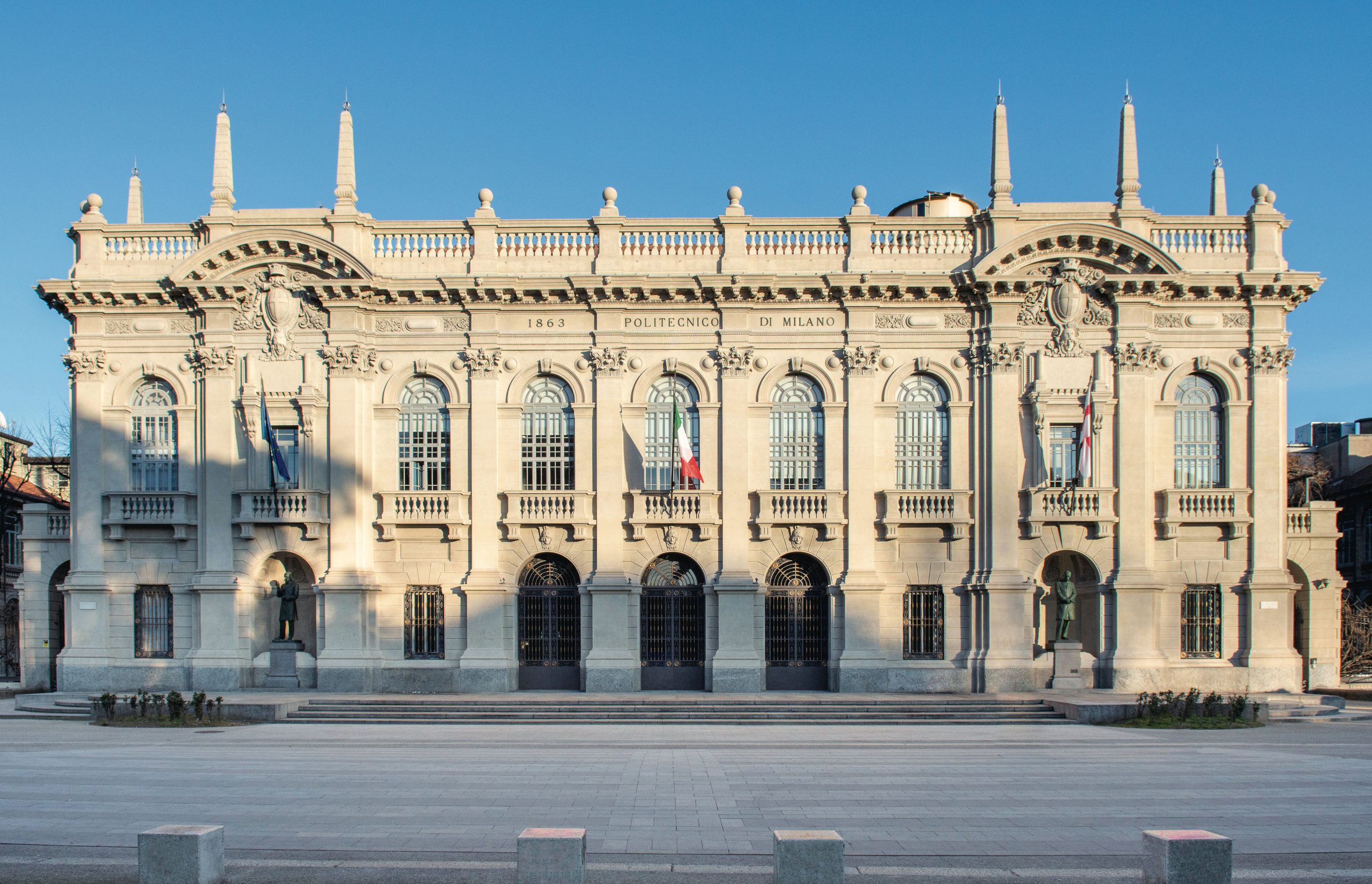
How does polimitestprep make you master the ARCHED Test?
Are you trying to pass the prestigious ARCHED Test at Politecnico di Milano or the TIL-A Test at Politecnico di Torino for architectural studies? Success in preparing for the ARCHED test and the TIL-A test is crucial. Here’s the outline of the 26-hour course that I offer to help you succeed. The course consists of 13 lessons, each being 2 hours long. It is available for both groups or individuals. The length of each topic (e.g. History of Architecture) is 6 hours (3 lessons). The non-history topics of the test are covered through the test-solving sessions. These session are comprised of tests that are selected amongst the old entrance exams of the past years. The tests were selected to cover the maximum number of diverse question types and subjects, in order to expose students to the largest number of possibilities.
Pre-Lesson: WhatsApp Group
You will be added to a WhatsApp group where you will be informed on the proceedings of the course, receive guides on the subjects & practice tests, and contact other students who are going through the same experience as you do.
Lesson 1: Level Test
We start with a practice test in order the determine the level of each student, and introduce students to the test format.
Lesson 2-3-4: History of Architecture (Math I for Math & Physics)
Our lessons start with a lecture on the history of architecture, an essential subject to know for the arched test. Given the length of the material (from Ancient Greek Architecture until today), the lessons are split into three. The first part will cover the period from the Ancient Greece until the Renaissance, the second part will be covering the period from Renaissance until the Rococo, while the third will cover the period from Neoclassical Architecture until today.
Lesson 5: Follow-up Practice Test
Following the lessons on history of architecture, a practice test will follow in order to measure the improvement students had. Students will solve the test in their free time, while the questions they might have and their explanations will be covered during the lesson. We will go-over each question vigorously, even the ones students might have gotten right, because there always could be an option they might have not known, and we will learn about it in order to not leave anything to chance.
Lessons 6-7-8: History of Art (Math II for Math & Physics)
The next set of lessons are on history of art. Just like history of architecture, history of art is also one of the most frequently asked subjects in the test. Therefore, a comprehensive guide will cover all you need to know through a two-part lesson. The guide is based on the previous architecture exams of the past years, and will be shared with all students in order to enable them to revise the material later on their own.
Lecture 9: Follow-up Practice Test
Following the lessons on history of art, a practice test will follow in order to measure the improvement students had. Students will solve the test in their free time, while the questions they might have and their explanations will be covered during the lesson.
Lessons 10-11-12: History of Europe and the World (Physics I and II for Math & Physics)
The final set of lessons will cover the history of the world, albeit from a Eurocentric point of view. Given that the test is prepared by the Italian Ministry of Education (MIUR), the history questions in the test will ask questions that are more biased towards a European and Italian narrative. A chronology of historical events document will be provided in order to cover all the knowledge needed for this topic. I will go through the document alongside interactive maps in order to explain the subject in the best way possible, with the focus being not only helping students memorize the dates and the events, but to enable them to understand why those events happened in the way that they did.
Lesson 13: Final Follow-up Practice Test
Once the lessons on all subjects are finished, we will solve one more practice test. At this point the improvement of the students’ knowledge and understand regarding the test will be clear. Hopefully, if a student demonstrates that they can successfully score above the minimum grade needed for admission to PoliMi, then the course is considered to be successfully completed. Otherwise, I would recommend solving more tests and taking more lessons in order to improve above the required mark.
Final Remarks and Why You Should Take This Course
What polimitestprep offers is experience. I have been tutoring students for the past 2 years, on top of my own experience with the application process and the architecture exam. I use my own experience to guide yours, in order to prepare you in the best way possible for the ARCHED and TIL-A Tests. Scoring the 2nd highest grade on the exam of 2019 was not easy, and helped me to accumulate a lot of knowledge about the test. Most important of which, I would say, is recognizing the predominant patterns of the test, such as which types of questions or what kind of topics may be asked more frequently. Would you use your time better by studying for Michelangelo or Pietro da Cortona? Do you need to know all of Cortona’s works? Which artists or historical event should you focus on more than the others? I believe that the best quality I can offer to any student is the use of this knowledge for your advantage.
I am sure that with the help of polimitestprep, you’ll be well-equipped to excel in the ARCHED Test for Politecnico di Milano and the TIL-A Test for Politecnico di Torino. Best of luck on your journey to architectural success!
Click here for the Course Calendar.
Click here for Frequently Asked Questions (FAQ).
Unlock Your Future at Politecnico di Milano: Master the ARCHED Entrance Test
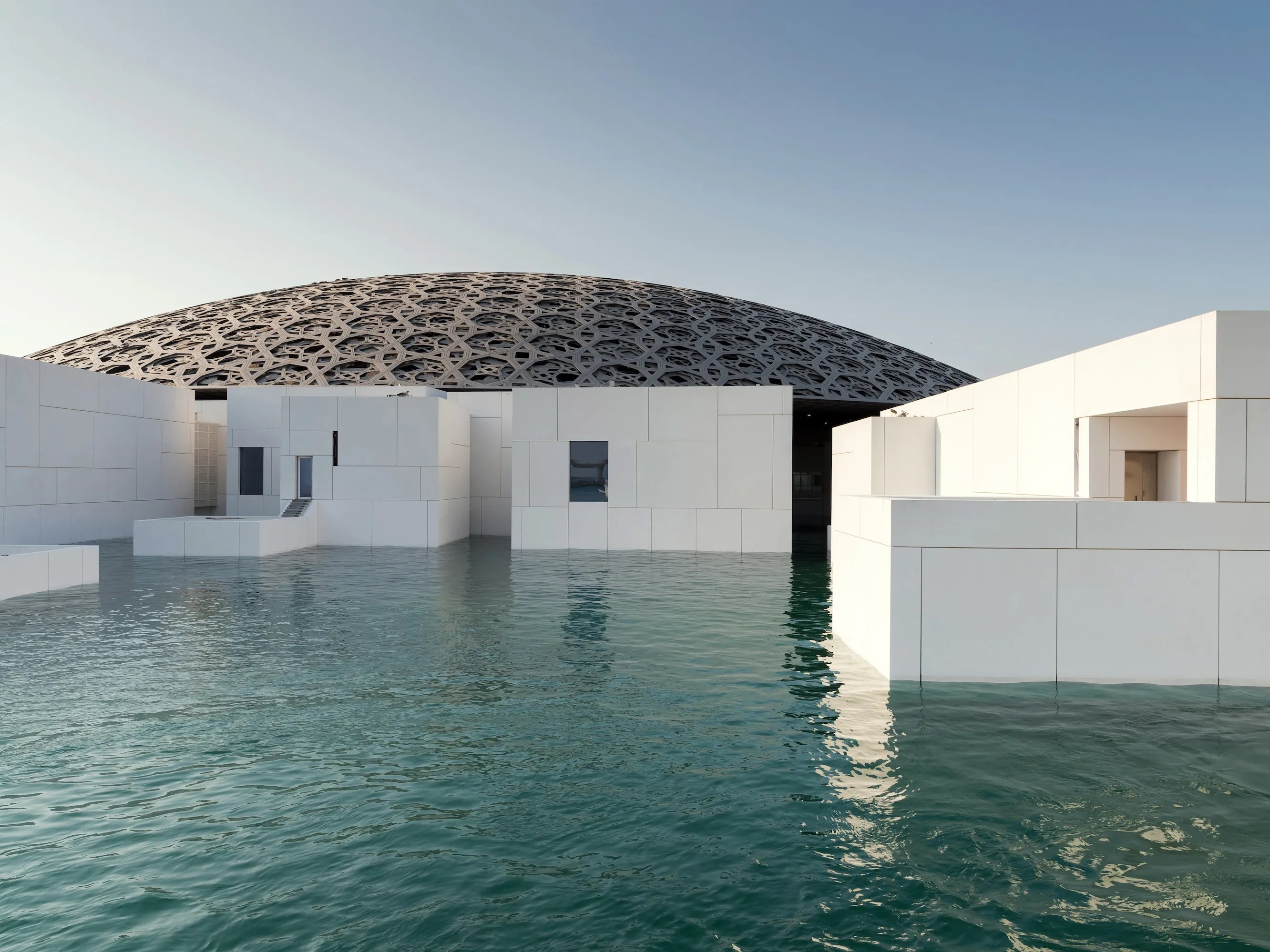
Above: Louvre Abu Dhabi
🌟 polimitestprep: Your Gateway to Success in the Arched Test! 🌟
Embark on a journey to excellence with polimitestprep – your key to conquering the Arched Test and securing a spot at prestigious institutions like Politecnico di Milano and Politecnico di Torino!
🏆 Why Choose polimitestprep?
At the helm of this transformative course is Sarp Tascioglu, your guide and the architect of your success. Having secured the second-highest score in the Arched Test in 2019, I bring a wealth of firsthand experience to the table. I’ve dissected the intricacies of past exams multiple times, gaining unique insights into the questions, patterns, and strategies that can set you apart.
🌐 Tailored for Politecnico di Milano and Politecnico di Torino:
Dreaming of pursuing architecture at Politecnico di Milano or Politecnico di Torino? Our course is meticulously designed to align with the requirements of these prestigious institutions. From the Arched Test to the Architecture Exam, polimitestprep has you covered.
🚀 Unlocking Success:
Benefit from my unique perspective on the Arched Test. I guide you on what truly matters, ensuring you focus your efforts where it counts. No time wasted on irrelevant details – our approach is strategic, efficient, and aimed at maximizing your success.
👩🏫 What We Offer:
- Comprehensive coverage of Arched Test topics
- In-depth analysis of past exams
- Proven strategies to optimize your score
- Personalized feedback to enhance strengths and address weaknesses
📈 Your Success, Our Mission:
Join polimitestprep and tap into my firsthand experience, meticulous preparation, and passion for guiding students toward success. Let’s navigate the Arched Test together and carve out a path for your thriving career in architecture.
🌐 SEO-Optimized Keywords:
polimitestprep, Politecnico di Milano, Politecnico di Torino, Arched Test, Architecture Exam, Architecture Test, PoliMi Architecture Test.
🔗 Connect with us and elevate your journey in architecture!
Why should you prepare with polimitestprep ?
Are you gearing up for the Arched test at Politecnico di Milano or the TIL-A test at Politecnico di Torino? Look no further than polimitestprep, an exceptional online course crafted by a master’s student at Politecnico di Milano who not only scored the second-highest grade in 2019 but has also perfected the art of acing these challenging exams.
Use the Expertise of a Top Scorer
polimitestprep is not your average test preparation course; it’s a unique opportunity to benefit from the insights and expertise of a master of architecture student who has navigated the intricacies of both the Arched test and the TIL-A test. Scoring second highest in 2019, I bring unparalleled knowledge and a firsthand understanding of the exams’ nuances.
Tailored Insights on the Past Exams
What sets polimitestprep apart is my in-depth experience, having not only conquered the tests but also meticulously solved past exams multiple times. This hands-on familiarity provides a unique advantage to students, helping them to understand the intricate understanding of the test’s structure, question types, and the nuances that set these exams apart.
Strategic Preparation for Success
Thanks to the course’s comprehensive study approach, polimitestprep offers strategic preparation insights. By having solved past tests repeatedly, I can discern which questions are likely to appear more frequently, allowing for a targeted study plan. This strategic approach enables students to allocate their time efficiently, focusing on areas that are more likely to be emphasized in the Arched test or TIL-A test.
Your Go-To Solution for Test Success
Navigating the Arched test or TIL-A test can be daunting, but with polimitestprep, you gain access to a proven method that goes beyond generic study guides. My firsthand experience and dedication to excellence make this online course an invaluable resource for aspiring students.
A Study Plan That Uses Proven Methods
polimitestprep offers a structured study plan designed to address the specific challenges posed by the Arched test. With a focus on real past exams and the comprehensive guides I use, students gain the confidence and knowledge needed to excel in this crucial assessment.
Conclusion
Choosing polimitestprep is not just a decision; it’s an investment in your success. Benefit from the expertise of a top scorer who understands the intricacies of the Arched test and TIL-A test like no other. Prepare strategically, study efficiently, and unlock your potential with polimitestprep – your pathway to triumph in the challenging admission tests of Politecnico di Milano and Politecnico di Torino.
Unlock Your Future at Politecnico di Milano: Master the ARCHED Entrance Test
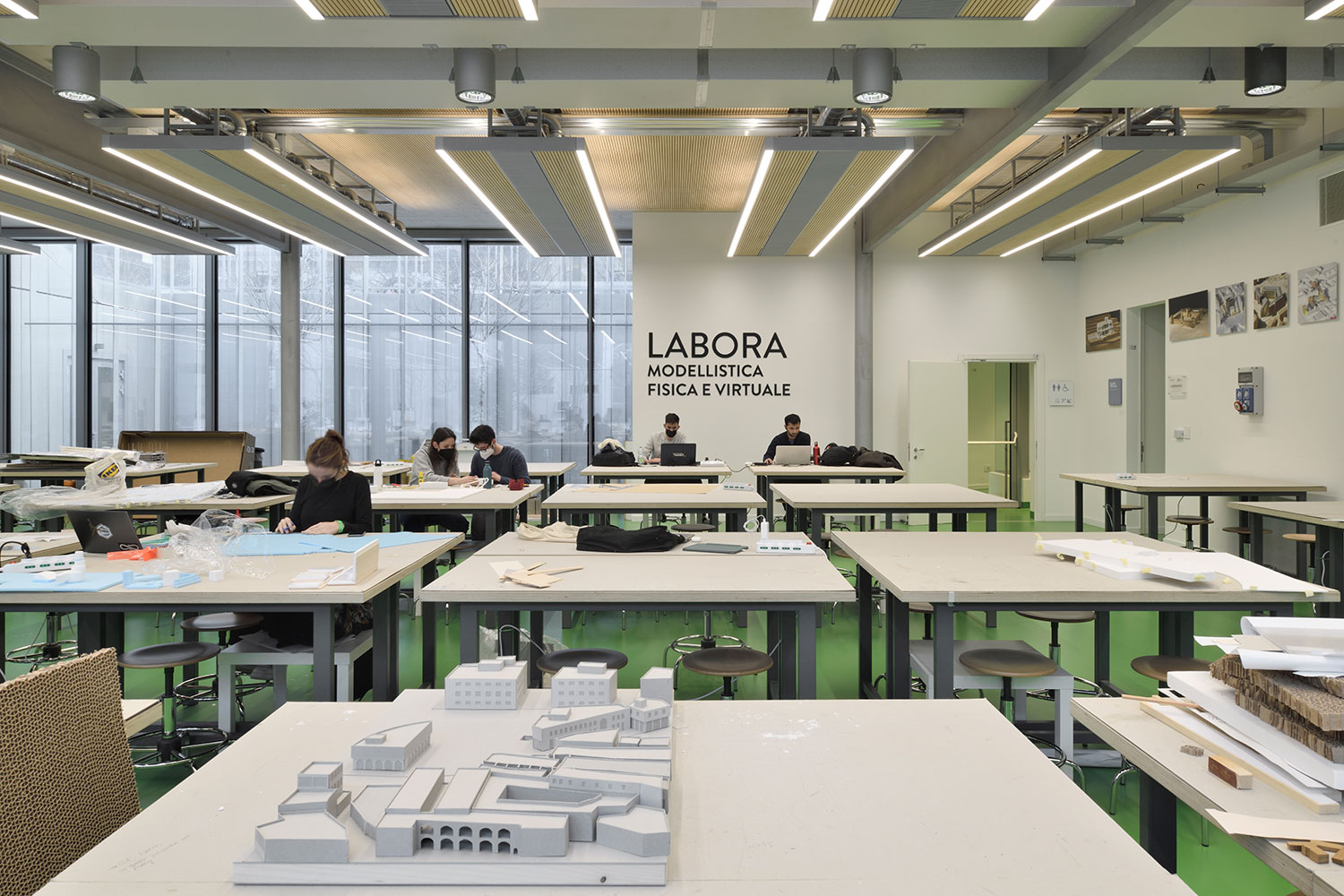
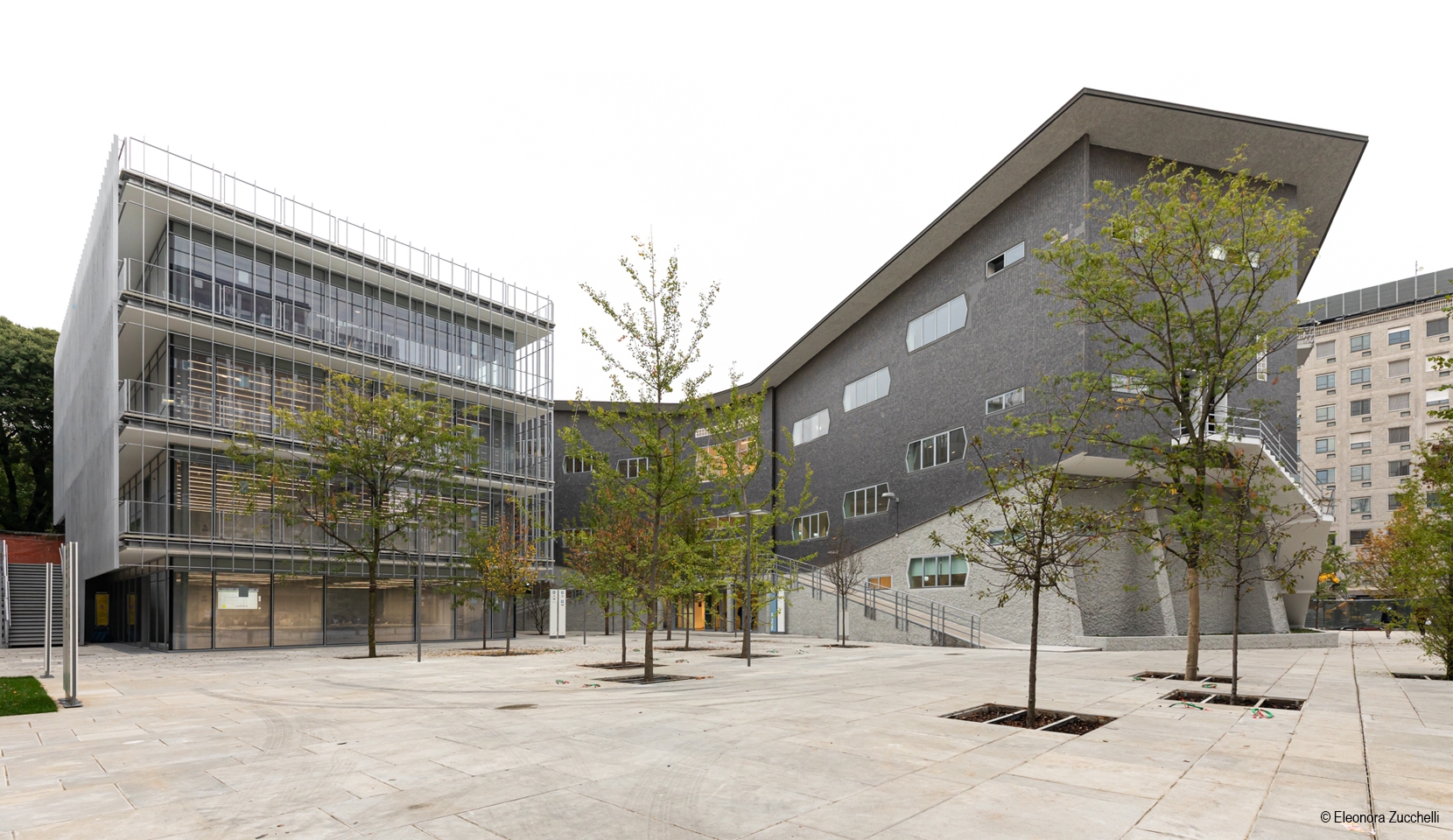
Building 16, New Campus Leonardo
Unlock Your Future at Politecnico di Milano: Master the ARCHED Entrance Test for Architectural Design
Are you aspiring to study architectural design at Politecnico di Milano, one of Europe’s leading universities? Secure your spot by acing the ARCHED entrance test, your gateway to a world-class education in architecture.
What is the ARCHED Entrance Test?
The ARCHED test is Politecnico di Milano’s rigorous entrance exam designed to assess your skills, creativity, and passion for architectural design. This comprehensive evaluation ensures that candidates are well-prepared for the challenging yet rewarding Bachelor’s program in Architectural Design. The test consists of 50 questions and lasts 100 minutes.
Contents of the ARCHED Test:
The ARCHED entrance exam evaluates candidates in the following areas:
1. Reading Comprehension (10 questions in 20 minutes)
2. Logical Reasoning (10 questions in 20 minutes)
3. Knowledge Acquired Through Study (10 questions in 20 minutes)
4. Drawing and Representation (10 questions in 20 minutes)
5. Mathematics and Physics (10 questions in 20 minutes)
How to Register for the ARCHED Test:
1. Visit the official Politecnico di Milano website for detailed information on test dates, registration deadlines, and fees.
2. Create an account on the university’s admission portal.
3. Complete the registration form, providing accurate personal and educational details.
4. Pay the registration fee through the secure online payment system.
5. Receive confirmation and detailed instructions for the test day.
Why Choose Politecnico di Milano?
Politecnico di Milano’s Bachelor’s program in Architectural Design offers a cutting-edge curriculum, renowned faculty, and state-of-the-art facilities. Graduates emerge as skilled architects, ready to shape the future of the built environment.
Let me help you to master the ARCHED entrance test and embark on an exciting academic journey at Politecnico di Milano. Your architectural dreams start here!
🌟 Arched Test Mastery: Your Roadmap to Success! 🌟
Uncover the secrets to mastering the Arched Test with our specialized course! Led by the architect of success who secured the second-highest score in the 2019 Arched Test, this program is your key to excellence at Politecnico di Milano and Politecnico di Torino!
🏆 Why Arched Test Mastery?
Join forces with your guide through this transformative journey. As a top scorer in the 2019 Arched Test, I’ve dissected the exam intricacies through multiple practice runs, providing you with invaluable insights and strategies for triumph.
🌐 Tailored for Politecnico di Milano and Politecnico di Torino:
Crafted for aspirants dreaming of Politecnico di Milano or Politecnico di Torino, polimitestprep aligns seamlessly with the unique demands of these prestigious institutions. From the Arched Test to the Architecture Exam, we pave the way to your academic success.
🚀 Unleash Your Potential:
Benefit from my nuanced understanding of the Arched Test. I guide you strategically, ensuring your focus on areas that truly matter. No time wasted on trivialities – our approach is streamlined, effective, and dedicated to maximizing your success.
👩🏫 What We Offer:
- Comprehensive coverage of Arched Test subjects
- In-depth analysis of past exams
- Proven strategies for optimal performance
- Personalized feedback for skill enhancement
📈 Your Success, Our Mission:
Enroll in polimitestprep and harness my experience, meticulous preparation, and dedication to steering students towards success. Let’s navigate the Arched Test together and carve a path for your thriving career in architecture.
🌐 SEO-Optimized Keywords:
Arched Test Mastery, Politecnico di Milano, Politecnico di Torino, Arched Test, Architecture Exam, Architecture Test, PoliMi Architecture Test.
As your dedicated tutor, I understand the challenges…
Hello there! I’m excited to share with you the comprehensive course I’ve designed for aspiring architects preparing for the Arched test, also known as the PoliMi architecture test/exam at Politecnico di Milano. As your dedicated tutor, I understand the challenges and nuances of this specific examination. The Arched test is a crucial step for anyone dreaming of joining the esteemed Politecnico di Milano’s architecture program. That’s why I’ve crafted an all-in-one course that covers every aspect of the Arched test, ensuring you’re well-prepared for success.
In our journey together, we’ll delve into the intricacies of the Arched test, tackling each section with precision. Whether it’s honing your architectural knowledge, refining your problem-solving skills, or mastering the unique elements of the PoliMi architecture exam, this course is tailored to elevate your performance. From theory to practice, we’ll navigate through the core concepts tested in the Arched exam, allowing you to approach each question with confidence. I’ll guide you through sample questions, share effective strategies, and provide personalized feedback to address your specific needs. I acknowledge that the Arched test is difficult and it’ll take a lot studying and guidance to get there. One thing that really motivated me when I was studying for the architecture exam was to image the day when the results are announced, and seeing that I got in! Imagining that moment and the happiness that it would be me and those around me would always work at motivating me. Even though I knew that there are a lot of things to memorize, a lot of tests to solve, and a lot of revision to do, that motivation would trump all those obstacles that were seemingly in my way.
Join me on this educational adventure, where we’ll unravel the intricacies of the Arched test, leaving no stone unturned in your pursuit of excellence in the PoliMI architecture test. Together, let’s build the foundation for your future in the world of architecture!

Unveiling the Arched Test: A Student’s Perspective
As a student embarking on the Laurea Magistrale (Master) in Architecture, Built Environment, and Interiors programme at Politecnico di Milano, I understand the significance of the Arched test in securing admission to this esteemed program. The arched test is the gateway that evaluates your aptitude and passion for architectural design. Here’s a glimpse into the essentials of this pivotal examination.
The Architecture Exam Journey:
Commencing my course, the architecture test looms as a crucial step in the admission process. The arched test is a comprehensive evaluation designed to assess a candidate’s general cultural knowledge, spatial reasoning, design thinking, and problem-solving abilities. It’s not merely an exam but a portal through which passionate individuals enter the captivating world of architectural design.
Navigating the Arched Test:
The Arched Test, a distinctive feature of Politecnico di Milano’s selection process, demands a multifaceted approach. It encompasses elements that delve into your creative flair, technical acumen, and your ability to translate ideas into tangible architectural solutions. This examination is a testament to Politecnico’s commitment to nurturing talent that goes beyond conventional boundaries.
Understanding the Architecture Test:
The architecture exam is more than a mere formality; it’s a tool that identifies students with the potential to thrive in the challenging yet rewarding field of architectural design. It gauges your readiness to embrace the interdisciplinary nature of the program, blending artistry with engineering precision.
How to Prepare for the Arched Test & TIL-A Test
1. Grasp the Exam Structure:
Understanding the nuances of the arched test is the first step. Familiarize yourself with the structure, types of questions, and the skills each section aims to evaluate. This clarity is the foundation for effective preparation.
2. Practice Practice Practice!:
Practicing past years exam is key for succes at the Arched & Til-A tests. Sharpen your mastery of the tests by solving as many problems as you can, exposing yourself to the maximum number of questions. In my course, I provide 6 previous exams, in additon to a bunch of resources that deliver you the information that is needed for the arched test in a concise and effective way.
3. Seek Guidance:
PoliMi Test Prep is always available to help. Contact me if you wish to learn from the experiences of someone who has successfully navigated the architecture test. I believe my insights and experiences can provide valuable tips and strategies for effective preparation and eventual success at the test. I believe my biggest value is that I can tell you how to study for this test in the most efficient way possible, providing guides that deliver you the information in the most concise way while using my own knowledge of the test to guide you in the best way possible to understand which topics should be focused on, while which ones should be avioded.
Conclusion
Embarking on the journey of preparing for the Arched test is an exciting yet challenging endeavor. It’s not just about acing an exam; it’s about embracing the opportunity to contribute to the rich legacy of architectural design at Politecnico di Milano. The architecture exam is your canvas, and how you prepare will determine the strokes that shape your future in this dynamic and inspiring field. So, dive in, explore, create, and let your passion for architecture shine through in every aspect of the arched test.
Politecnico di Milano – Arched Test
A Short Overview
Politecnico di Milano, renowned for its excellence in engineering, architecture, and design education, stands as a prestigious institution attracting students globally. For prospective students eyeing the Architecture program, understanding the entry requirements, particularly the architecture exam known as the “arched test,” is paramount.
Politecnico di Milano Architecture Program Overview
The Architecture program at Politecnico di Milano is highly esteemed, offering a comprehensive curriculum that blends theory with practical application. Students engage in a dynamic learning environment that fosters creativity and innovation.
Arched Test: Key to Admission
Central to gaining entry into Politecnico di Milano’s Architecture program is the arched test, an architecture exam designed to assess the applicants’ aptitude and skills. This examination plays a pivotal role in the selection process, emphasizing the institution’s commitment to ensuring that admitted students possess the necessary foundation to thrive in the demanding field of architecture.
Architecture Exam Structure
The architecture test evaluates candidates on various aspects critical to success in the Architecture program. It typically includes components that assess general culture knowledge, design thinking, and problem-solving skills. The exam aims to identify individuals with a genuine passion for architecture and the potential to contribute meaningfully to the field.
Politecnico di Milano Entry Requirements
In addition to excelling in the arched test, prospective students must meet other entry requirements set by Politecnico di Milano, such as proficiency in the English language.
Preparing for Success
To optimize performance in the arched test, applicants are encouraged to thoroughly familiarize themselves with the examination structure and practice relevant skills. Seeking guidance from current students (that would be me!) or alumni who have successfully navigated the architecture exam can provide valuable insights into the preparation process.
Conclusion
Politecnico di Milano’s Architecture program stands as a gateway to a world-class education in a field that demands both creativity and technical prowess. The arched test, serving as a crucial component of the admission process, underscores the institution’s commitment to selecting candidates with the potential to excel in the dynamic realm of architecture. Prospective students aspiring to join this esteemed institution should approach the architecture exam with a combination of dedication, preparation, and a genuine passion for the discipline.
For further details on the arched test and Politecnico di Milano’s Architecture program, please refer to the official university website or contact me here. Your journey toward a rewarding education in architecture begins with a solid understanding of the entry requirements and a commitment to showcasing your unique talents in the arched test.
 polimitestprep